


How to Choose the Right Audio System for Your Project?
Choosing the right audio system depends on more than just the type of speakers or sound power. It starts with understanding the nature of the project, its requirements, spaces, and how the system will be used. In this guide, we explore the key factors that will help you choose a professional audio solution that delivers clear sound, proper coverage, and the reliability your project requires.
The audio system is an essential part of many modern projects, whether it is a mosque, retail store, showroom, educational institution, meeting and conference room, or event venue.
However, randomly selecting equipment does not guarantee a high-quality audio system.
The right solution should be designed according to the nature of the space, its size, the number of audio zones, the intended use, and the expected level of performance.
Therefore, choosing the right audio system starts with studying the project and understanding its requirements before selecting the equipment.


The first step is to determine where the audio system will be used and how it will be used.
The requirements of a mosque are different from those of a conference room, while the needs of a retail store or showroom differ from those of an educational institution.
For example:

Mosques
The main focus should be on:
Clear sound.
Even sound distribution.
Adequate coverage of the required areas.
Clear voice reproduction for the Imam and the Muezzin.
Minimizing noise and echo as much as possible.

Retail Stores and Showrooms
They may require:
Background music.
Audio announcements.
Sound distribution across multiple zones.
Individual volume control for each zone when required.
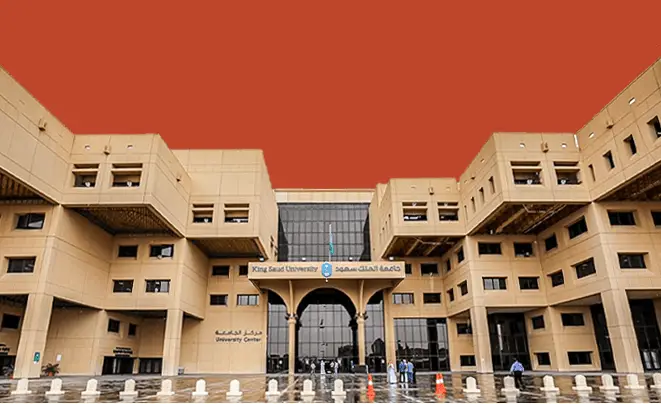
Educational Institutions
The priorities may include:
Clear speech and voice reproduction.
Coverage of classrooms and halls.
Ease of use.
Paging and announcement systems.
The ability to control multiple audio zones.
Events and Venues
Events may require:
Higher sound levels.
Coverage of larger areas.
Equipment suited to the nature of the event.
Flexibility in operation and control.
Careful setup and preparation before the event begins.
2. Assessing the Space
The project area is one of the most important factors affecting the design of an audio system.
It is not enough to consider the total area of the space alone. You should also take into account:
- The layout of the space.
- Ceiling height.
- Number of rooms or zones.
- Seating arrangements.
- The nature of the interior surfaces.
- The presence of obstacles or columns.
- The distance between the speakers and listeners.
A large space may require a greater number of speakers distributed strategically, while using too many speakers in a small space may not be appropriate.
The goal is not to increase the number of speakers, but to achieve the proper sound coverage.
3. Define the Audio Zones
In some projects, the entire space does not require the same volume level or the same audio content.
For this reason, the project is divided into Audio Zones.
For example, a project may include:
- Reception area.
- Main hall.
- Corridors.
- Meeting rooms.
- Outdoor areas.
Each zone may require a different volume level or different audio content.
Therefore, defining the audio zones during the design stage helps create a system that is more flexible and easier to control.
4. Define the Purpose of the Audio System
Before selecting the equipment, the primary function of the system should be clearly defined.
Is the goal:
Music playback?
Or:
Audio announcements?
Or:
Speech and lectures?
Or:
Conferences and meetings?
Or:
Events and performances?
Or a combination of more than one application?
This directly affects the selection of speakers, microphones, amplifiers, processors, and other system components.
5. Sound Quality Is More Important Than Volume
One of the most common misconceptions is that a good audio system is simply one that produces louder sound.
However, system quality does not depend on volume level alone.
Other important factors include:
- Speech clarity.
- Sound balance.
- Sound distribution.
- Noise reduction.
- Frequency control.
- Feedback reduction.
- Speaker suitability for the space.
Therefore, a less powerful system that is properly designed may be more effective than a more powerful system selected without proper planning.
6. Choosing the Right Speakers
The type of speakers required depends on the nature of the project and how the system will be used.
Depending on the project, possible solutions include:
- Ceiling Speakers
- Wall-Mounted Speakers
- Column Speakers
- Horn Speakers
- Pendant Speakers
- Line Array Systems
- Outdoor Speakers
There is no single speaker type that is suitable for every project.
The right choice depends on the space, required coverage, sound level, and intended use.
7. Choosing the Right Microphones
If the project relies on speech, meetings, conferences, or announcements, selecting the right microphone becomes an essential part of the system.
Different solutions may be used depending on the application, such as:
- Wireless Microphones
- Gooseneck Microphones
- Conference Microphones
- Ceiling Microphones
- Handheld Microphones
The nature of the space, number of speakers, and intended use of the system should all be taken into consideration.
8. The Importance of Amplifiers and Signal Processing
Speakers are not the only components of an audio system.
A professional audio system may include several components, such as:
Microphones → DSP → Amplifiers → Speakers
These components should be selected to work together as an integrated system.
DSP (Digital Signal Processing) can also be used to control, optimize, and distribute audio according to the project’s requirements.
9. Don’t Rely on Equipment Selection Alone
It is important to understand that purchasing equipment from the best brands does not automatically guarantee the best system.
The final performance depends on:
Design + Equipment Selection + Distribution + Installation + Programming + Tuning
This is why the engineering design stage is one of the most important stages of the project.
10. What About Existing Projects?
If you already have an existing audio system, completely rebuilding it is not necessarily the solution.
The existing system can first be evaluated to determine:
- Equipment condition.
- Weak points.
- Coverage quality.
- Performance level.
- Possibility of adding new components.
- Possibility of upgrading the system.
Based on the assessment, it can be determined whether the most suitable approach is development, upgrading, partial replacement, or complete replacement.
11. Why Do You Need Professional Consultation?
It can be difficult for a project owner to determine all the required system components independently.
This is where professional consultation becomes important.
A specialized engineering team can assess:
Project → Spaces → Usage → Audio Zones → Performance Requirements → Equipment → Design → Implementation
and then recommend the appropriate solution for the project instead of selecting individual pieces of equipment separately.
What Does MIXER Provide?
At MIXER, we provide integrated audio solutions for projects, starting with requirements analysis, consultation, and system design, followed by supplying the appropriate equipment, installation, configuration, and commissioning.
We also provide solutions for a variety of sectors, including:
- 🕌 Mosques
- 🏬 Retail Stores and Showrooms
- 🏫 Educational Institutions
- 🏢 Meeting and Conference Rooms
- 🎤 Events
- 🏗️ New and Existing Projects
Solutions and equipment are selected according to the specific nature and requirements of each project.
Choosing the right audio system does not start with selecting a speaker or microphone. It starts with understanding the project and its requirements.
Every project has different requirements. Therefore, a successful audio solution is one that is designed according to:
Project Type + Space + Usage + Required Coverage + Performance + Scalability
If you are unsure which system is right for your project, the MIXER team can assess your requirements and help you determine the appropriate audio solution.